Ever opened the Quran and noticed tiny marks above and below the letters? Those are Harakat, and they tell you exactly how to say each letter.
Harakat in Arabic are short vowel marks. Without them, you’d be guessing the sound. With them, you can read the Quran the right way. That’s why Harakat in the Quran matter so much for beginners.
This lesson is made for anyone who wants to learn Harakat from scratch. You’ll cover the three short vowels, how to read Arabic letters with Harakat, and Tanween. Each lesson comes with a free video, so you can watch, repeat, and practice at your own pace.
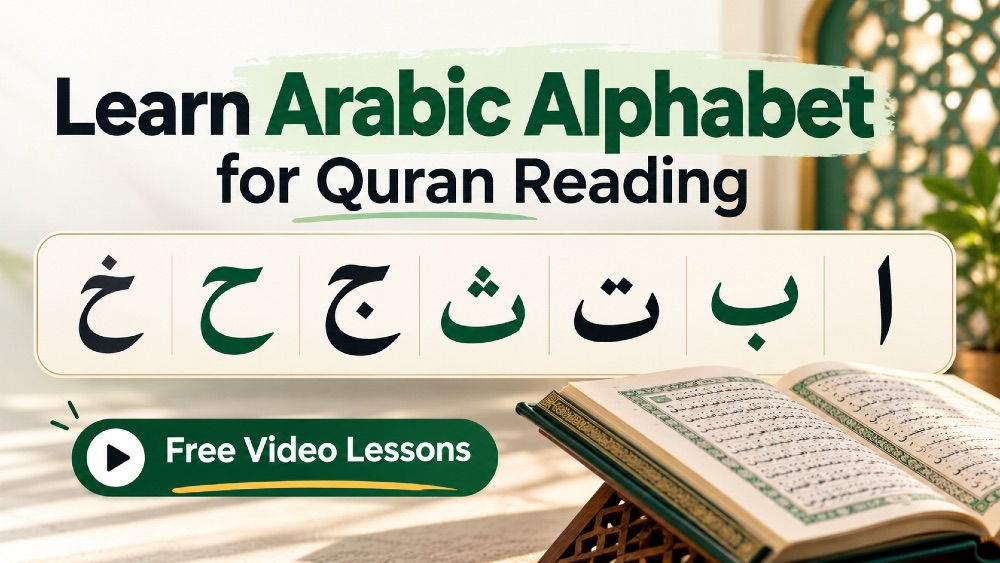
If you’re still getting comfortable with Arabic alphabet pronunciation, start with the Arabic alphabet lesson first. It makes this one much easier.
What Is Harakat in Arabic?
The Harakat meaning is simple: movement. It (also spelled Harkat) is the plural of Harakah. These are small marks placed above or below a letter. They tell you which vowel sound to use for that letter. In the Quran, they show you exactly how each word should be read.
You’ll also hear them called Arabic diacritics, diacritical marks, vowel signs, or Arabic vowel marks. Same thing, different names.
Why do they matter? Arabic letters mostly carry the consonant sound. The Harakat add the short vowels, so you know exactly how to say each letter and word. Take them away and the word can be hard to read.
There are three main Arabic short vowels:
- Fathah
- Dammah
- Kasrah
You may also see them written as Fatha, Damma, and Kasra. Same marks. You’ll meet each one in the next section.
Watch the video to learn how Harakat work.
The Three Short Vowels: Fathah, Dammah, Kasrah
Let’s meet the three short vowels one by one. These are the basic Arabic Harakat rules every beginner needs: each mark gives one short sound. Say them out loud as you go.
Fathah: The “A” Sound

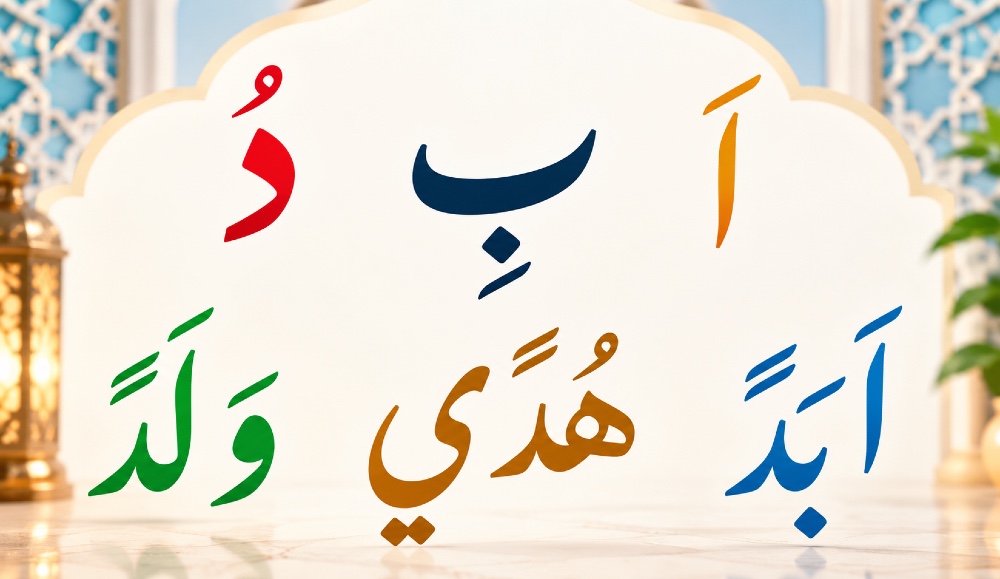
Fathah ( ـَ ) is a small slanted line above a letter. It gives a short “a” sound that goes up, like the “a” at the start of “above.”
- بَ = Ba
- لَ = La
- حَ = Ha
Dammah: The “U” Sound

Dammah ( ـُ ) looks like a tiny curl above the letter, almost like a small Waw. It gives a short “oo” sound that goes around, like the “u” in “put.” Remember, it’s not long like in “soon.”
- بُ = Bu
- زُ = Zu
- فُ = Fu
Kasrah: The “I” Sound

Kasrah ( ـِ ) is a small slanted line under the letter. It gives a short “i” sound that goes down, like the “i” in “sit.” Remember, it’s not the long “ee” in “seen.” Arabic short vowels and long vowels are different, and the long ones come later with Madd.
- بِ = Bi
- جِ = Ji
- سِ = Si
How to Read Arabic Letters With Harakat
Same letter, different sound. Take س (Seen): سَ is Sa, سُ is Su, and سِ is Si. English works the same way. “Bat,” “bit,” and “but” all change because of one small vowel.
Learning how to read Arabic with Harakat gets easy once you follow the same four steps every time:
- Look at the letter and say its default sound
- Check for a mark above or below it
- Add the matching vowel: Fathah is “a,” Dammah is “u,” Kasrah is “i”
- Blend the two sounds together
That’s how to read Arabic with vowels: one letter, one mark, one sound.
Here is a small chart to practice with:
| Letter | Fathah | Dammah | Kasrah |
| ب | Ba | Bu | Bi |
| ت | Ta | Tu | Ti |
| ج | Ja | Ju | Ji |
| س | Sa | Su | Si |
| ك | Ka | Ku | Ki |
| م | Ma | Mu | Mi |
Say “Bu” like a very short “boo”. Cover the sounds and try reading the letters on your own, then check yourself. This is how Arabic letters with Harakat start to feel natural.
Watch this practice video to get more comfortable with Harakat.
Harakat vs Tashkeel
Many learners ask what the difference is between Harakat and Tashkeel.
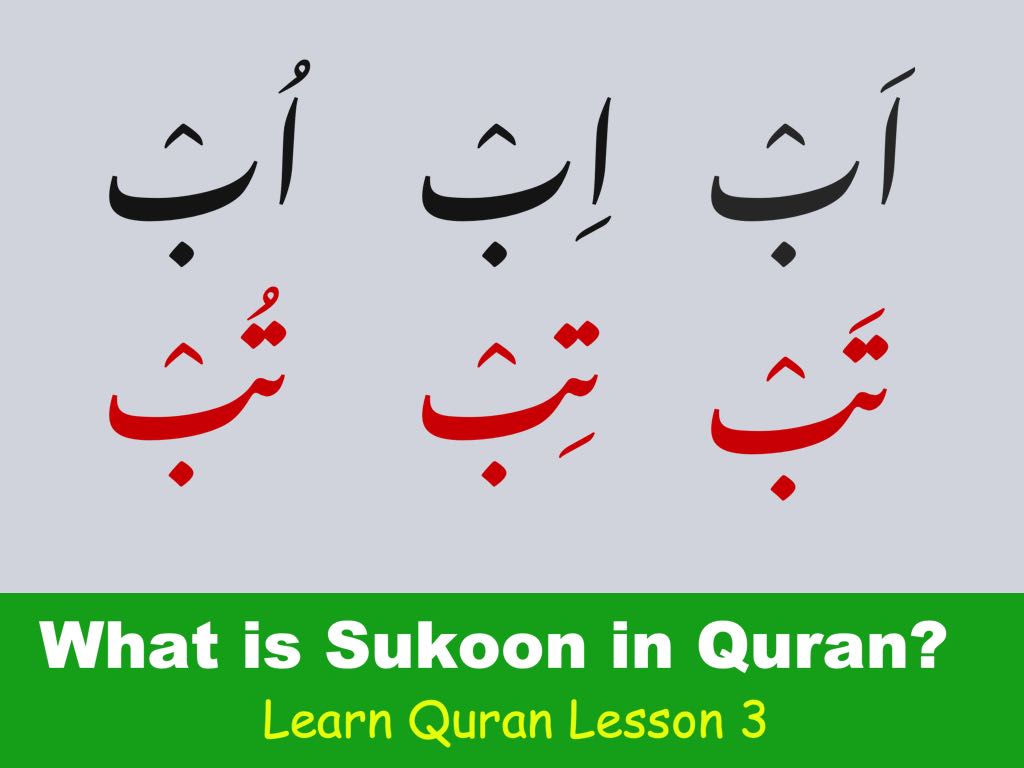
Tashkeel is the whole system of marks (signs) used on Arabic letters. Harakat are the short vowel marks inside that system. Sukoon, Shadda, and Tanween are also part of Tashkeel.
So all Harakat are Tashkeel, but not all Tashkeel are Harakat. Some teachers also count Tanween and Sukoon as Harakat, so you may see slightly different answers depending on the book. Sukoon has its own lesson, which you can read here: What Is Sukoon in Quran?
What Is Tanween in Arabic?

Ever wondered how to make sounds like “sun” or “win” while reading the Quran? That’s Tanween.
Tanween is a double Harakah at the end of a word. It adds a soft “n” sound after the vowel. Instead of one mark, you’ll see two, above or below the letter.
There are three types:
- Tanween Fathah ( ـً ) sounds like “un,” as in “fun” or “sun”
- Tanween Dammah ( ـٌ ) is a short “oo” sound with a soft “n.” English doesn’t have an exact match, so watch the video below to hear how it works
- Tanween Kasrah ( ـٍ ) sounds like “in,” as in “fin”
Here is a real example. In Surah Al-Falaq, Ayah 5, the word حَاسِدٍ ends with Tanween Kasrah. You say “Haasidin,” with that soft “n” at the end.

Watch this video to understand Tanween and how it works.
Why Harakat Matter in the Quran
In Quranic Arabic, one small mark can change the meaning of a word, or even a whole ayah. For example, عَلِمَ (alima) means “he knew,” while عُلِمَ (ulima) means “it was known.” Same letters, different Harakat, different meaning.
Here is another example, from Surah Al-Baqarah, Ayah 251. The Quran says, “Dawood killed Jaloot.” Dawood ends with a Dammah on the final Daal, and Jaloot ends with a Fathah on the final Taa. Swap those two marks, and the meaning flips to “Jaloot killed Dawood.”
That’s why accuracy matters, and why Quran Harakat are so helpful for learners. A Quran with Harakat, also called a Quran with full Tashkeel, shows you the correct Quranic Arabic pronunciation, so you don’t have to guess. It also builds the habit of Tajweed pronunciation from day one and keeps your Quran recitation accurate.
Practice, Typing and Free Resources
You don’t need hours. Ten minutes a day is plenty.
- Use the full Arabic alphabet chart and say each letter with all three Harakat
- Open the Quran with full Tashkeel and read one short line
- Add Tanween once the short vowels feel easy, then move on to Sukoon in the next lesson
Three practice videos will help.
Practice Video: Harakat and Tanween
Practice Video 2: Harakat and Tanween
Practice Video 3: Harakat and Tanween
Typing Arabic with Harakat: On many Arabic keyboard layouts, holding Shift and pressing a key types a mark. Layouts vary, so try it on yours, or use the on-screen Arabic keyboard in your language settings.
Plenty of free resources and apps can help improve your Arabic pronunciation. If you’d like a teacher to correct your Arabic letter pronunciation, a Tajweed course is a good next step.
What You’ve Covered
Great work. You now know:
- What Harakat in Arabic are and how they differ from Tashkeel
- How to read Fathah, Dammah, and Kasrah
- How Tanween adds a soft “n” to the end of a word
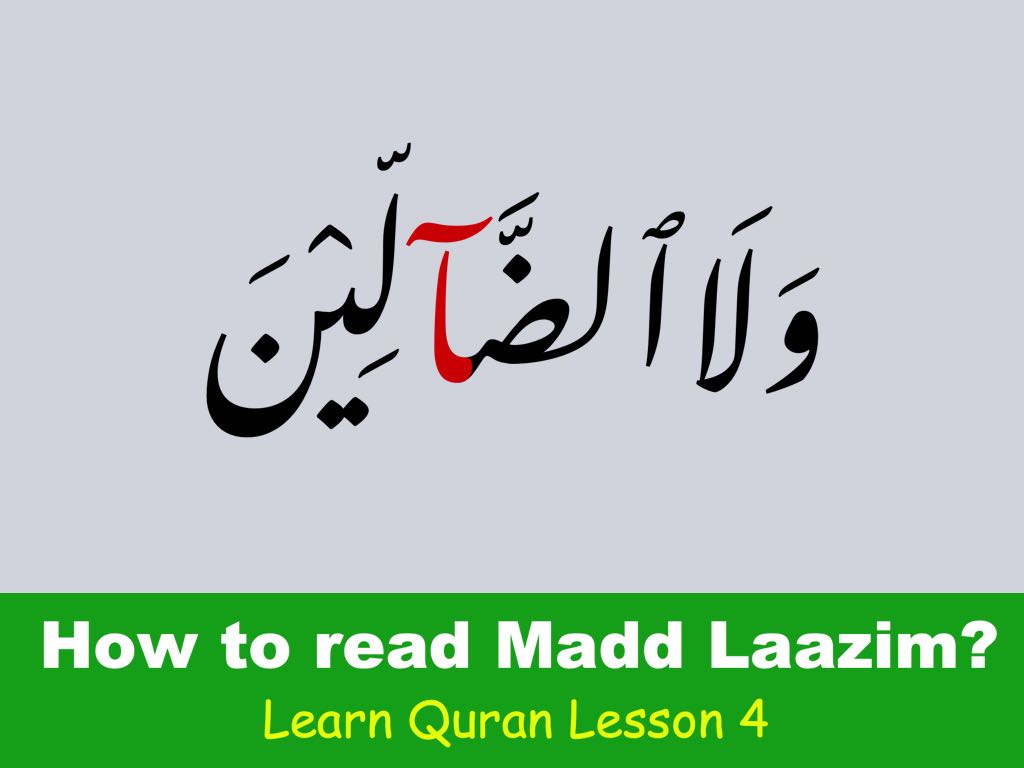
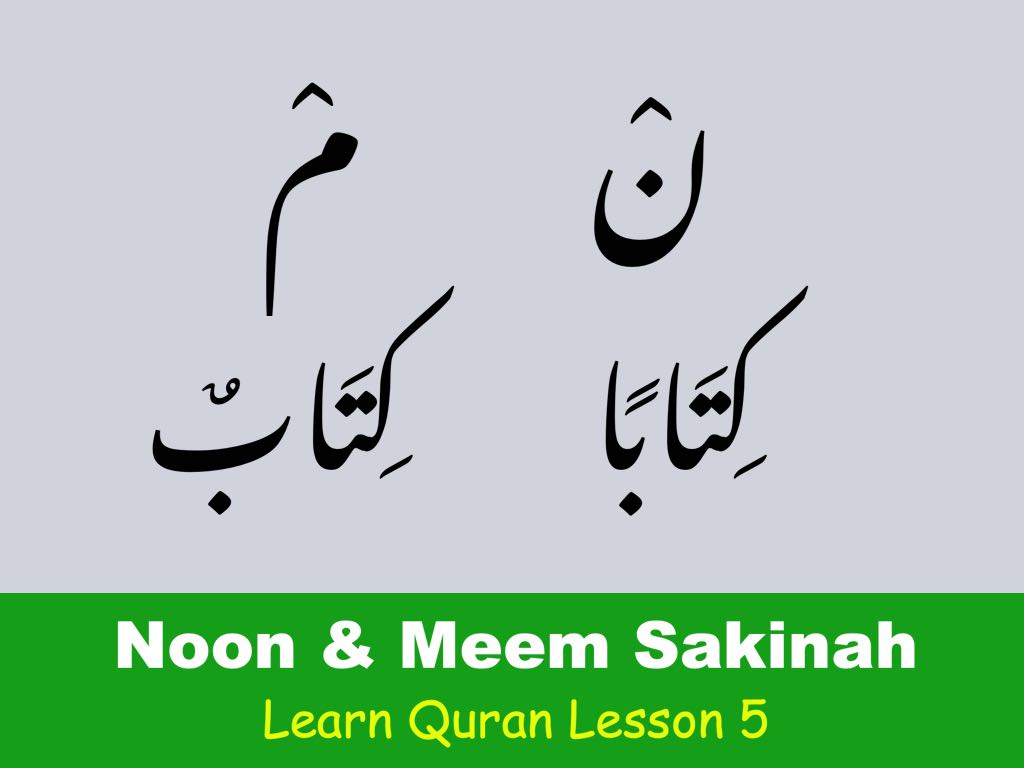
That’s a strong base for Quran reading. Next, you’ll go deeper into Sukoon in the Quran, then the other types of Madd and Tajweed rules like Noon and Meem Sakinah.
Next lesson: What Is Sukoon in Quran?
Frequently Asked Questions About Harakat in Arabic
What is Harakat in Arabic, and what does it mean?
Harakat are the small marks above or below Arabic letters that show the short vowel sounds. The word is the plural of Harakah, meaning “movement.” The three main ones are Fathah, Dammah, and Kasrah.
How many Harakat are there in Arabic?
Three main ones. Many teachers also include Tanween and Sukoon, depending on how they group the marks.
How long is one Harakah?
About one beat. A short vowel is one Harakah, and a stretched long vowel lasts two.
How do I read Arabic with Harakat?
Look at the letter, check the mark above or below it, add the matching short vowel, and blend the two sounds. Fathah gives “a,” Dammah gives “u,” and Kasrah gives “i.”
What are the small marks on Arabic letters called?
Harakat, or more broadly Tashkeel. They’re also called Arabic diacritics, diacritical marks, or vowel signs.
What is the difference between Harakat and Tashkeel?
Tashkeel is the full system of marks on Arabic letters. Harakat are the short vowels inside that system.
What is Sukoon in Arabic?
Sukoon is a small circle above a letter. It means the letter has no vowel. Read the full lesson here: What Is Sukoon in Quran?
Why are Harakat important in the Quran?
They keep the pronunciation of every word exact. A wrong Harakah can change the sound and even the meaning of a word.
How do I type Arabic with Harakat?
Use an Arabic keyboard layout, then hold Shift and press certain keys to type the marks. The exact keys depend on your layout, so test them or use the on-screen Arabic keyboard.
What is the best way to learn Harakat?
Start small. Practice the three short vowels with a few letters every day, then read short verses with full Tashkeel. A Tajweed course can help if you want a teacher to check your pronunciation.
Credit: These video tutorials were created by Imam Hassan Raza and shared here with his permission. I organized them into this series so you can learn at your own pace.
Maa Shaa Allah
السلام عليكم
الله همبارك.
Ma Sha Allah.
Alhamdulillah!